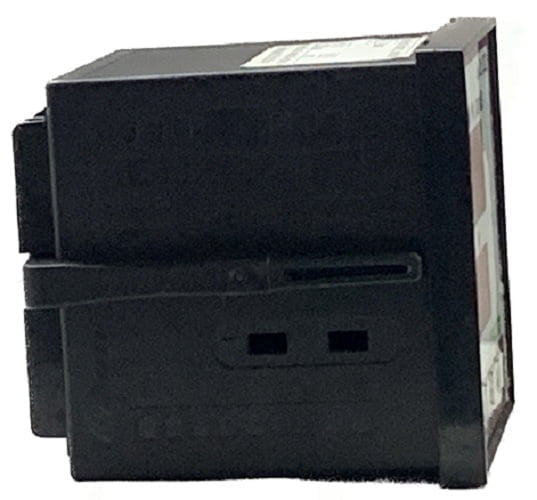
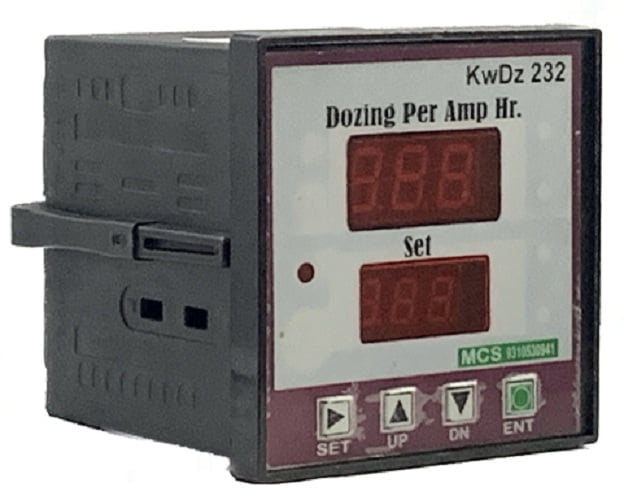
KWAH Dosing Controller Manufacturer in Faridabad

Sale!

Original price was: ₹16,000.00.Current price is: ₹9,200.00.

- +
Guaranteed Safe Checkout

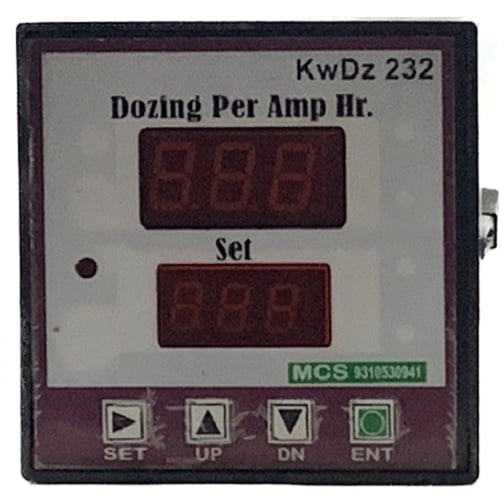
KWAH Dosing Controller is used for dosing makeup chemical in zinc plating, tin plating and chrome plating units. It is manufactured by UMA Industries at Village Sunped, Ballabgarh, Faridabad, Haryana, India, with India-wide technical support.

  • Set the amp-hour value at which chemical dosing should start
  • Set the quantity in ML to be dosed
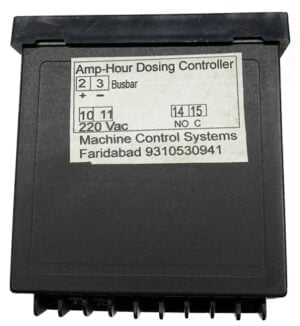
  • Connect shunt ends or bus-bar potential difference as input
  • Useful for plating-process dosing control in industrial units
  • Ready-stock compact products may be dispatched by air courier within 3 working days, subject to availability and carrier schedules
  • Published prices are company-confirmed; quotation-stage options may vary by requirement

Contact UMA Industries for selection guidance, wiring support and quotation details.

UMA Industries manufactures and supplies KWAH Dosing Controller from Village Sunped, Ballballgarh, Faridabad, Haryana, India, for controlled chemical dosing in plating shops that need reliable amp-hour based makeup dosing. The product is commonly used in zinc plating, tin plating and chrome plating units where the dosing quantity must be linked to process load rather than estimated manually. UMA Industries supplies and provides technical support to customers across India, and published website prices are company-confirmed. For buyers comparing related options, you may also review Digital pH Controller Online, PH Controller with Dosing Quantity and delay, pH Controller 1 Relay, and Passivation Dosing Controller.

This page is meant to help plant owners, maintenance teams and panel builders understand where the KWAH Dosing Controller fits in a dosing system, how to select it, and what to verify during commissioning. In simple terms, the controller uses the measured process load input from shunt ends or bus-bar potential difference and allows the operator to set the amp-hour point at which chemical should be dosed, along with the dose quantity in ML. That makes it useful where repeated, controlled makeup additions are required, especially on production lines that must keep bath chemistry stable shift after shift.

Applications for plating and dosing control

The KWAH Dosing Controller is intended for industrial chemical dosing in plating environments, especially where the process depends on load-linked additions. In zinc plating, tin plating and chrome plating units, the controller helps the operator trigger makeup dosing based on amp-hour accumulation rather than only on visual judgement. That can be useful for maintaining repeatable dosing discipline in batch work and continuous production alike.

Typical buyers include electroplating shops, finishing lines, maintenance departments and control-panel integrators who want a compact dosing controller for chemical replenishment logic. In a plating plant, the actual dosing quantity, the dosing interval and the cross-check method are usually determined by the process engineer or production supervisor. The controller provides the setpoint logic; the plant decides the procedure around it.

If your operation already uses a separate meter or controller architecture, you may also compare this product with RS 485 Modbus RTU ph Controller or ph Controller Panel Mount to understand display style, mounting and integration preferences. The right choice depends on whether your line needs simple local dosing control, panel integration or another control workflow.

How the KWAH Dosing Controller works

The control concept is straightforward. You set the amp-hour point at which chemical must be dosed, then set the quantity in ML to be dosed. The input is taken from the shunt ends or from the bus-bar potential difference, and the controller uses that information as the basis for dosing control. The operator then cross-checks the ampere load flow through the bus-bar and feeds the value into the controller for calibration.

This means the KWAH Dosing Controller is not meant to replace process understanding. It supports a disciplined dosing routine. The plant still needs to decide the correct chemical, the correct dose quantity, the interval between additions and the verification method after dosing. For that reason, this product is best viewed as a practical industrial control tool rather than a universal chemical recipe device.

Control logic and operator setup

During setup, the operator should confirm the load input source, verify the amp-hour trigger point and check the ML dose value against the process requirement. In a well-run line, the controller setting should match the actual load conditions and the desired replenishment practice. If the process changes, the setpoints may also need to be reviewed by the plant team. This is especially important where the output bath is sensitive to under-dosing or over-dosing.

For customers who want to compare nearby product families, digital ph controller india is often reviewed alongside this model because both are used in industrial control environments. However, the selection decision should always be based on the process being controlled, the input signal available and the control logic required on site.

Installation and panel integration

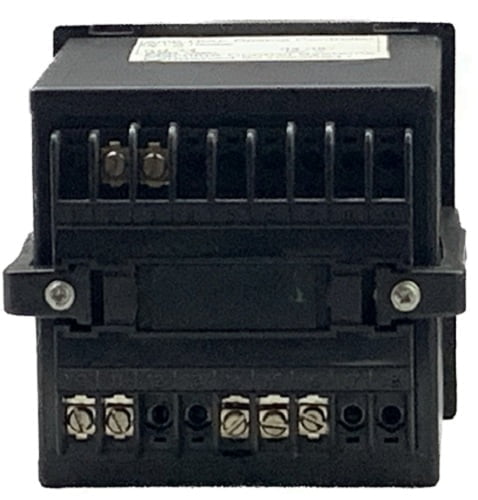
Installation should be done by a qualified electrician or panel technician familiar with industrial control wiring. The input from shunt ends or bus-bar potential difference must be connected as specified by the plant’s wiring practice. The controller should be mounted where the display and controls remain easy to read, and where cable routing is clean and protected from splash, heat and mechanical damage.

Good installation practice also includes checking terminal tightness, cable identification and the stability of the input signal before full operation. If the controller is part of a larger panel, make sure that nearby devices do not introduce electrical noise or poor grounding conditions. Where needed, the panel builder may standardize the front cut-out, labeling and auxiliary components to suit the production line.

For operators or distributors who need a related model with clear relay logic, you can also review PH Controller 2 Point Calibration 2 Relay Out. That comparison can help when a plant is evaluating how the controller integrates into existing dosing or alarm routines.

Calibration and cross-check procedure

Calibration is an important part of stable dosing performance. The source workflow indicates that the ampere load flow through the bus-bar should be checked and fed into the controller so the value can be cross-checked by the controller. In practice, the plant should treat this as a commissioning and routine-verification step, not a one-time activity. If the line load changes, the calibration assumption may also change.

Good calibration practice means the process team should compare the controller reading and dosing action with the actual operating condition. If dosing appears early, late or inconsistent, the cause may be in the input wiring, the set amp-hour value, the entered ML quantity, or the process load variation itself. Careful verification helps reduce chemical waste and improves consistency in plating makeup control.

Suggested routine verification points

Before relying on the controller for continuous production, verify the load input connection, the trigger point, the programmed dose quantity and the operator’s understanding of the set values. Routine checks are also useful after maintenance, panel relocation or electrical work. If your plant operates multiple lines, it is helpful to maintain a record of the settings used on each line so adjustments can be traced when the bath behavior changes.

Where a plant wants a simpler local control unit for comparison, reviewing pH Controller 1 Relay can help clarify relay-based control expectations. The best product is the one that matches the actual process logic, not just the display style.

Electrode care, process care and operating discipline

Although the KWAH Dosing Controller is not an electrode-based pH measurement device, it still belongs to the broader process-control ecosystem. That means cleanliness, wiring discipline and routine inspection matter. Keep the unit free from dust, chemical spray and panel contamination. Check that terminals remain tight and that the cable entries stay protected from strain.

If the controller is used in a plating area, consider how fumes, moisture and cleaning activity affect the panel. Protective placement and sensible housekeeping can extend practical service life and reduce nuisance faults. Operators should also understand that chemical dosing control works best when the upstream process is stable and the input signal is properly verified.

For teams that also need broader pH system references, the US EPA Method 9040C — pH Electrometric Measurement can be used as general pH measurement guidance. It is not a product approval or certification, but it can help plant teams understand why controlled measurement and disciplined procedure matter in industrial water and process work.

Safety and operating precautions

Because the controller works in industrial production environments, safety starts with isolation, proper wiring and careful commissioning. Ensure the unit is installed only by competent personnel. Do not work on live wiring. Keep the panel closed during operation where possible, and verify that the input source is connected correctly before enabling process use. If the controller is placed near chemical handling areas, protect it from splashes and cleaning liquids.

Good safety practice also includes making the set values visible to the authorized operator and preventing unauthorized changes. In a production shop, an incorrect amp-hour trigger point or an incorrect ML setting may cause under-dosing or over-dosing. Both can affect product quality and chemical consumption. A small amount of preventive discipline is usually better than rework or waste.

Why buyers choose UMA Industries in Faridabad

Manufacturing from Faridabad is a practical advantage for industrial buyers who want a source that understands local panel-building and process-control requirements while still serving national demand. UMA Industries is positioned to support replacement orders, new installations and process-line upgrades. Since the company supplies across India, customers can discuss application fit, wiring expectations and quotation-stage requirements before placing an order.

The approved commercial wording for dispatch is also important: ready-stock compact products, controllers, spares and accessories may be dispatched by air courier within 3 working days, subject to availability, payment confirmation, destination serviceability and carrier schedules. Delivery timelines for complete salt spray chambers and other large equipment are confirmed separately according to model, capacity, packing and freight mode. For this product, the same practical principle applies: final movement and timing depend on order specifics and logistics conditions.

Selecting the right KWAH Dosing Controller

When choosing the KWAH Dosing Controller, start with the process need. Ask whether the plant is dosing makeup chemical in zinc plating, tin plating or chrome plating, what input signal is available from the line, and how the operator wants to set the trigger and dose quantity. Then confirm panel size, mounting style, wiring access and any required integration with the rest of the control cabinet. Published prices are company-confirmed, while size, capacity, internal and external dimensions, power supply, optional controls/accessories, delivery schedule and mode of transport may be finalized or changed according to customer requirements in the quotation or proforma invoice.

If you are comparing this with another family member, the following links may help: ph Controller in Pune, ph Controller Manufacturers in Faridabad, and ph Controller in Kolhapur. These pages are useful when buyers need to compare mounting, integration and industrial use patterns across related control products.

FAQ

What is the main use of the KWAH Dosing Controller?

The KWAH Dosing Controller is mainly used for dosing makeup chemical in zinc plating, tin plating and chrome plating units. It helps the operator trigger dosing based on amp-hour input and a set ML quantity.

How is the dosing point set?

You set the amp-hour value at which chemical should be dosed and also set the quantity in ML to be dosed. The load input is taken from the shunt ends or bus-bar potential difference.

Does the controller replace process calibration?

No. The controller supports the process, but the plant still needs to check ampere load flow through the bus-bar and feed the correct value into the controller for cross-check and calibration.

Can this product be used outside plating units?

It is primarily described for plating-line dosing applications. If another process has similar load-based chemical dosing requirements, the plant engineer should first confirm suitability before purchase.

Is the KWAH Dosing Controller a pH measuring instrument?

No. It is a dosing controller for chemical addition logic. If your application needs pH measurement or pH control, you should compare it with appropriate pH controller models.

What support does UMA Industries provide?

UMA Industries manufactures the product in Faridabad and supplies and provides technical support to customers across India. Buyers can discuss application fit, wiring, and quotation details before ordering.

How should I verify performance after installation?

After installation, verify the input connection, amp-hour trigger setting, dose quantity and actual dosing behavior during operation. Keep a record of settings so future adjustments can be traced easily.

What should I compare before placing an order?

Compare the available input signal, panel space, desired dosing logic, and the way the controller will be integrated into the plating line. If needed, review related models such as ph Controller Panel Mount and PH Controller with Dosing Quantity and delay.

If you need help selecting the right configuration, contact UMA Industries for technical guidance and quotation support. The KWAH Dosing Controller is most effective when the trigger setting, dose quantity and wiring method are matched correctly to the production line, so please share your process details before purchase. For industrial buyers, that is the fastest route to a practical and repeatable dosing solution.


Need help choosing? Call/WhatsApp us for industrial pH/ORP solutions.

Weight500 g
Dimensions12 × 11 × 11 cm

Reviews

There are no reviews yet.

Be the first to review “KWAH Dosing Controller Manufacturer in Faridabad”
🟢 WhatsApp Price 📞 Call Now
Scroll to Top