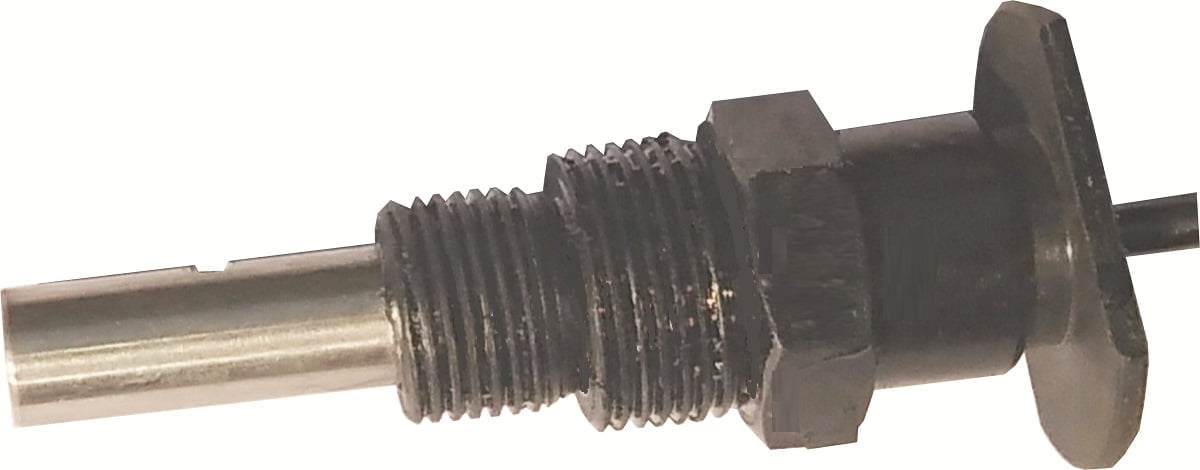
Conductivity / TDS Sensor
Conductivity / TDS Sensor is supplied by Machine Control Systems for industrial monitoring, control, safety and process applications. TDS and conductivity instruments are used to monitor dissolved ionic content and electrical conductivity in water and process solutions. Meter, controller and sensor variants support indication, control and dosing applications.
MCS products are selected according to the actual machine or process requirement. Customers can share the application, input signal, measurement range, output requirement, supply voltage, panel size and operating conditions for technical review before ordering.
Technical Details
- Measurement range: 000 to 9999 µS/cm with 1 µS/cm resolution
- Accuracy / tolerance: ±1%
- Output signal: sine wave
- Operating voltage: 5 V DC
- Body material: PP / ABS for industrial use
- Suitable for Arduino, Raspberry Pi, PLC and microcontroller-based systems
- RO and DM water plants
- Cooling towers and boilers
- Water treatment and chemical processing
- Quality laboratories and process automation
- Continuous water-quality indication
- Controller and relay options where applicable
Operating Principle
The instrument receives a sensor, pulse, switch, electrical or process input according to its product family. Internal electronics process the signal and provide indication, counting, timing, monitoring, communication or relay control according to the selected configuration.
Applications
- RO and DM water plants
- Cooling towers and boilers
- Water treatment and chemical processing
- Quality laboratories and process automation
Key Benefits
- Continuous water-quality indication
- Controller and relay options where applicable
- Sensor options for online installation
- Useful for dosing and treatment control
Installation and Selection Guidance
- Confirm the complete application and operating environment before selection.
- Match the input or sensor type with the selected instrument.
- Verify supply voltage, mounting size, output type and control logic.
- Install the product in a clean panel or suitable protected location.
- Keep signal wiring separated from high-current and VFD cables where applicable.
- Use proper earthing, protection and qualified electrical installation practices.
Operation and Maintenance
- Follow the product wiring and operating instructions.
- Inspect terminals, cables, sensors and mechanical mounting periodically.
- Keep the display, enclosure and ventilation areas clean.
- Verify calibration, counting accuracy, timing or relay action as applicable.
- Disconnect electrical power before service or wiring changes.
Why Choose Machine Control Systems?
- MCS industrial products supplied from Faridabad, Haryana
- Application-based technical guidance before dispatch
- Pan-India supply for manufacturers, OEMs and system integrators
- Support for correct model, input, output and sensor selection
Frequently Asked Questions
What is TDS and Conductivity Instrument?
It is an industrial instrument or system used for measurement, monitoring, safety, timing, counting or automatic process control according to the selected product family.
Where is this product used?
Typical applications include industrial machines, control panels, water-treatment systems, process plants, laboratories and production-monitoring installations.
How should the correct model be selected?
Selection should consider the input signal, measurement range, sensor type, output requirement, supply voltage, mounting size and operating environment.
Is technical guidance available?
Yes. Machine Control Systems provides technical guidance for model selection, application and installation before supply.
Is the product available?
Yes. The product is available for supply across India from our Faridabad manufacturing unit.
Can it be integrated into an industrial control panel?
Panel integration depends on the selected model, enclosure size, electrical supply, input and output configuration.
What information is needed for a quotation?
Share the application, required range or capacity, sensor/input type, output requirement, operating supply, quantity and delivery location.
Are customised configurations available?
Application-specific configurations may be considered where technically feasible. Confirm the exact requirement before ordering.
How should the product be maintained?
Keep the unit clean and dry, inspect terminals and sensors, follow the operating instructions and verify calibration or function periodically where applicable.
Who manufactures the product?
MCS brand industrial instruments and controllers are manufactured or supplied by Machine Control Systems from Faridabad, Haryana.
Pan-India supply and technical support
Available across India from our Faridabad manufacturing unit, with technical guidance for product selection, installation and application.
Explore more Sensor and Probes products from Machine Control Systems.
Need help choosing? Call/WhatsApp us for industrial pH/ORP solutions.




Reviews
There are no reviews yet.