Conductivity Sensor for Water Quality Monitoring

Sale!

Original price was: ₹2,000.00.Current price is: ₹900.00.

- +
Guaranteed Safe Checkout

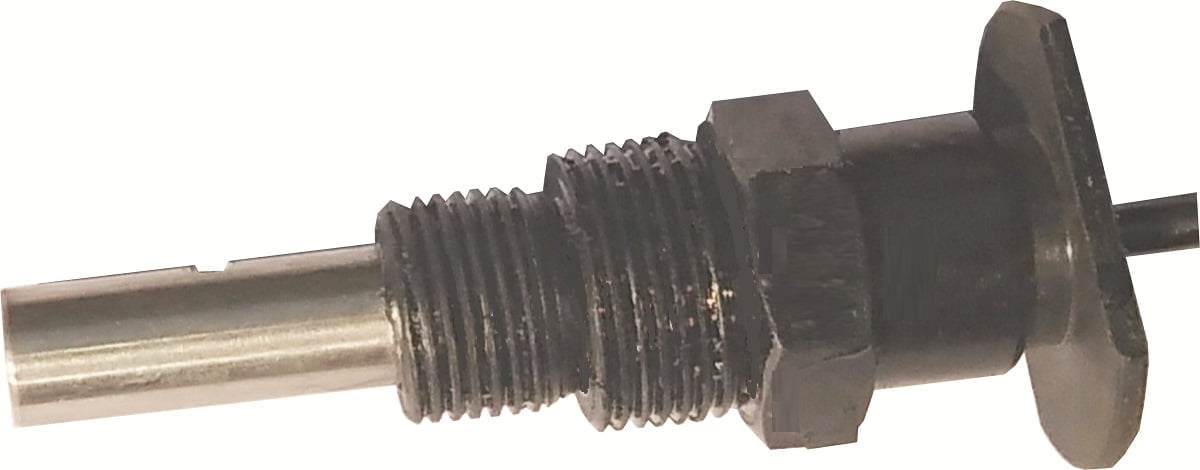
UMA Industries manufactures and supplies this Conductivity Sensor for TDS/EC measurement in water quality monitoring, aquaculture, and controller-based applications. It is manufactured at UMA Industries’ unit in Village Sunped, Ballabgarh, Faridabad, Haryana, India, with support across India.

  • Range: 000 to 9999 MCM
  • Resolution: 1 mcm
  • Tolerance: +/- 1%
  • Output: sine wave
  • Operating voltage: 5 VDC
  • Body: PP/ABS, size 16 x 110

Published prices on the website are company-confirmed. Product size, capacity, power supply, and accessories may be finalized in quotation.

UMA Industries manufactures and supplies the Conductivity Sensor for TDS and EC measurement in water quality monitoring, aquaculture, and controller-based systems. This probe is intended for practical field and panel use where a compact, low-cost conductivity reading is needed for process checks, general water testing, and maker or automation projects. It is manufactured at UMA Industries’ unit in Village Sunped, Ballabgarh, Faridabad, Haryana, India, and UMA Industries supplies and provides technical support to customers across India.

The listed product is positioned as a conductivity cell / TDS sensor with a usable measurement range of 000 to 9999 MCM, 1 mcm resolution, +/- 1% tolerance, sine wave output, 5 VDC operating voltage, and PP/ABS body construction. These are the supplied product facts and should be matched to the intended controller or acquisition circuit during selection. Published prices on the website are company-confirmed. Product size, capacity, internal and external dimensions, power supply, optional controls/accessories, delivery schedule and mode of transport may be finalized or changed according to customer requirements in the quotation or proforma invoice.

Applications and buyer use cases for Conductivity Sensor

The Conductivity Sensor is commonly chosen for water-related monitoring where the user wants to understand dissolved ionic content, verify trend changes, or support a treatment or circulation process. Typical use cases include aquaculture tanks, RO pre/post checks, utility water, laboratory learning setups, and simple industrial monitoring loops. It is also useful where conductivity is used as a quick indicator for relative water cleanliness, salt content, or process stability.

Because conductivity readings are interpreted differently across applications, buyers should decide first whether they need a simple display, controller input, PLC interface, or experimental measurement setup. For online use, confirm the compatible electronics, cable routing, and installation point in the line or tank. For bench or test use, confirm whether the sensor will be immersed, mounted in flow, or used with a sample holder.

For related process and automation accessories, you may also review the Dosing Pump Timer for dosing logic and the tds meter modbus rtu rs485 page if your project needs a communicating meter/controller setup. If your system uses a pH-and-conductivity package, the PH Sensor Lab Glass 1 Meter Cable and PH Sensor Toshcon Glass 1 Meter Cable pages may help you compare sensor-style mounting and cable requirements.

How to select the right Conductivity Sensor

Select the Conductivity Sensor by checking four practical points: the expected conductivity span, the controller or meter input type, the operating voltage, and the physical mounting method. A low-cost sensor can perform well when its range and electronics are matched correctly, but a mismatch between probe type and readout circuit can produce unstable or misleading readings. That is why the sensor, meter, and installation method should be selected as a set rather than as isolated parts.

Selection checklist for Conductivity Sensor

  • Confirm the expected water quality band before choosing the sensor range.
  • Check whether the controller needs a sine-wave probe input.
  • Verify the supply voltage and the available panel power.
  • Confirm whether the body material and cable route suit the environment.
  • Decide if you need an immersed probe, flow-based setup, or a test-bench arrangement.

For quotation-stage planning, keep in mind that product size, capacity, internal and external dimensions, power supply, optional controls/accessories, delivery schedule and mode of transport may be finalized or changed according to customer requirements in the quotation or proforma invoice. This allows the Conductivity Sensor to be matched to the actual application instead of forcing the job into a fixed configuration.

Operation and installation basics

The Conductivity Sensor should be installed in a way that keeps the sensing area correctly exposed to the sample and avoids mechanical stress on the body or cable. In water systems, stable flow or consistent immersion typically improves repeatability more than frequent repositioning. Before commissioning, ensure the controller input, supply voltage, and display scaling are aligned with the probe characteristics.

Conductivity Sensor operating sequence

Start with clean wiring, connect the probe to the intended meter or control system, and verify the signal response in a known sample. If the application uses a tank, ensure that the installation point avoids trapped air, excessive turbulence, or dead zones. If the application uses a circulating line, confirm that the sensor remains wetted and protected from physical impact. Recheck the reading after the system stabilizes, because a freshly installed probe may read differently from a settled process condition.

Where the sensor is used with a microcontroller, PLC, or DIY electronics project, the system integrator should confirm signal conditioning, scaling, and any conversion logic before use. For simple automation work, a companion accessory such as the Human Sensing Timer or Counter with Timer may be relevant where the project combines sensing with timed operations or event counting.

Calibration and routine verification

The this product should be verified periodically against a known reference solution or a trusted comparison point, especially when the output is used for process decisions. Calibration frequency depends on process severity, fouling, and how critical the reading is to operation. For routine checks, compare the probe reading with a stable standard condition, inspect response consistency, and note any drift over time.

Routine verification is particularly important in aquaculture, RO support, and light industrial monitoring, where even a simple probe can drift if coated with deposits or exposed to changing chemistry. If readings become unstable, inspect the cable, connectors, mounting, and the matching meter before replacing the sensor. The probe itself is only one part of the measurement chain; electronics, wiring, and installation conditions all influence the displayed value.

Maintenance and care

Basic maintenance for the this product is straightforward: keep the sensing area clean, avoid harsh physical handling, and store or install it in a way that reduces contamination. Periodic cleaning should be gentle and suitable for the wetted materials. Because water chemistry varies from application to application, deposits may build up faster in hard-water, nutrient-rich, or process-heavy systems.

During shutdowns, protect the probe from unnecessary abrasion and check that the connector or cable termination remains dry and intact. Before putting the system back into service, inspect the sensor body, verify stable output, and confirm the meter still reads sensibly in the process condition. If your project combines monitoring with control outputs, matching accessories such as the Digital Humidity Meter or Humidity Sensor may be useful in broader environmental or process builds.

Safety and handling notes

Handle the this product with care during wiring and installation. Confirm supply voltage before energizing the circuit, keep connections dry, and isolate the probe from accidental mechanical force. If the sensor is fitted into a live line or tank, follow plant safety practice for access, cleaning, and sample handling. Electrical and wet-environment work should be performed by a competent technician who understands the installation and the downstream controller.

Why choose UMA Industries from Faridabad

Buyers who need a dependable source for a conductivity probe can work with UMA Industries in Faridabad for a practical supply route, technical guidance, and India-wide customer support. The product is manufactured at the company’s Ballabgarh facility, which helps industrial and project buyers source sensors alongside other process-control components from one supplier. For local buyers and resellers, this also simplifies repeat ordering, matching, and application support.

Published prices on the website are company-confirmed. Product size, capacity, internal and external dimensions, power supply, optional controls/accessories, delivery schedule and mode of transport may be finalized or changed according to customer requirements in the quotation or proforma invoice. Ready-stock compact products, controllers, spares and accessories may be dispatched by air courier within 3 working days, subject to availability, payment confirmation, destination serviceability and carrier schedules. Delivery timelines for complete salt spray chambers and other large equipment are confirmed separately according to model, capacity, packing and freight mode.

Frequently asked questions

What is a this product used for?

A this product is used to measure the electrical conductivity of water or other liquids, which helps users estimate dissolved ionic content and track process changes. It is commonly used in water monitoring, aquaculture, and control applications.

Is this this product the same as a TDS sensor?

It is closely related. A this product measures EC, and many systems use that value to estimate TDS depending on the meter or conversion logic. The exact interpretation depends on the controller and the application method.

Can this sensor be used with Arduino or Raspberry Pi?

Yes, the supplied description indicates suitability for low-cost systems and for Arduino and Raspberry Pi projects, provided the circuit and signal conditioning match the probe output and operating voltage.

How often should I calibrate the this product?

Calibration frequency depends on the application, process cleanliness, and stability requirements. A routine verification schedule is recommended whenever the reading is important for decisions or control.

What should I check before ordering?

Before ordering a this product, confirm the intended range, voltage, signal type, controller compatibility, and installation method. These practical checks usually matter more than the probe name alone.

Do you supply across India?

Yes. UMA Industries supplies and provides technical support to customers across India, while manufacturing from Faridabad.

If you need a practical, budget-conscious Conductivity Sensor for monitoring or project integration, contact UMA Industries for selection support and quotation-stage finalization. The exact Conductivity Sensor choice should be matched to your process, wiring, and controller needs so the installation performs as intended.

Manufactured in Village Sunped, Ballabgarh, Faridabad, Haryana, with pan-India supply and technical support; suitable for water quality monitoring, aquaculture, and industrial process checks without local-claim overreach.[{

Conductivity Sensor is supplied with the final configuration recorded in the customer quotation or proforma invoice.

Conductivity Sensor is supplied with the final configuration recorded in the customer quotation or proforma invoice.


Need help choosing? Call/WhatsApp us for industrial pH/ORP solutions.


Weight300 g
Dimensions6 × 6 × 6 cm

Reviews

There are no reviews yet.

Be the first to review “Conductivity Sensor for Water Quality Monitoring”
🟢 WhatsApp Price 📞 Call Now
Scroll to Top