Salt Spray Test Chamber Manufacturer in Faridabad

Sale!

Original price was: ₹145,000.00.Current price is: ₹105,000.00.

- +
Guaranteed Safe Checkout

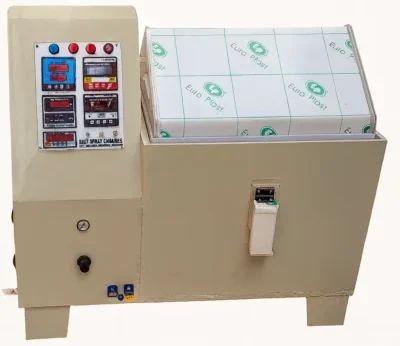
UMA Industries manufactures this salt spray test chamber for Neutral Salt Spray (NSS) corrosion evaluation of coated metals, plated parts, fasteners and other industrial components. It is designed for operation in accordance with ASTM B117, ISO 9227 and JIS Z 2371 requirements and is factory-tested before dispatch.

  • Suitable for NSS corrosion comparison of paints, powder coatings, plating and conversion coatings
  • Applicable standard and test plan govern specimen preparation, exposure duration and interpretation
  • Exposure-zone temperature, fog generation, air regulation, solution level and drainage are functionally checked before dispatch
  • Manufactured in Faridabad and supported across India
  • Model capacity, controls and accessories may vary by quotation and requirement

Contact UMA Industries for quotation, technical guidance and selection support.

UMA Industries manufactures and supplies this salt spray test chamber for Neutral Salt Spray (NSS) corrosion evaluation in Faridabad, with pan-India technical support for laboratories, production QA teams and R&D users. The chamber is designed for operation in accordance with the applicable NSS requirements of ASTM B117, ISO 9227 and JIS Z 2371, and each unit is factory-tested before dispatch so the buyer receives a functional machine ready for commissioning at site. Published prices on the website are company-confirmed, while size, capacity, internal and external dimensions, power supply, accessories and transport mode may be finalized in quotation stage.

For buyers comparing a salt spray test chamber across lab and production needs, the practical decision usually starts with the specimen envelope, batch size, available floor space, and the level of control needed for repeatable NSS work. The chamber family shown on this page is suitable for routine corrosion comparison of coated metals, plated components, powder-coated parts, fasteners, hardware and automotive parts. If your method needs only NSS, you can keep the specification lean and focused; if you need a broader corrosion program later, the chamber selection should be confirmed against the exact test plan rather than assumed from generic catalogue language.

Applications of salt spray test chamber

Manufactured at UMA Industries’ unit in Village Sunped, Ballabhgarh, Faridabad, Haryana, India, the chamber is relevant to buyers who source equipment from the Faridabad industrial ecosystem and nearby engineering belts. That includes QA laboratories, sheet-metal and fabrication shops, coating applicators, plating lines, fastener makers, auto-component vendors and contract testing facilities that need corrosion screening without depending on a distant supplier. The Faridabad origin matters because installation coordination, service communication and replacement planning are easier when the OEM understands local plant schedules and industrial workflows.

This salt spray test chamber is typically selected by users who want a compact corrosion-testing platform for routine incoming inspection, process qualification, batch comparison and supplier audits. When the procurement team is balancing test volume, chamber footprint and method discipline, the right approach is to match the chamber size to the longest specimen, the tallest fixture, and the number of samples that must be exposed together. The quotation can then confirm the exact configuration, because size, capacity, operating controls and accessories remain quotation-stage items rather than universal fixed promises.

Industry-specific corrosion-testing applications

In practical use, a salt spray test chamber helps teams compare corrosion resistance across paint systems, zinc or nickel plating, chrome finishes, anodized aluminium, passivation, conversion coatings and powder coating systems. Automobile suppliers often use it for brackets, fasteners, trims, housings and small assemblies. Electrical and appliance manufacturers use it for coated enclosures, hardware and stamped parts. Fabricators and sheet-metal processors use it to check whether surface preparation and finish quality remain consistent from batch to batch.

For engineering teams, the useful output is not a vague pass/fail label but a controlled comparison under an agreed method. ASTM B117, ISO 9227 and JIS Z 2371 define apparatus and procedure conditions; the selected standard edition, customer specification or approved test plan determines specimen preparation, exposure duration, acceptance criteria and result interpretation. That is why the same chamber can support different test programs, provided the working procedure is documented properly before a run begins.

The chamber is also useful where the buyer wants a visible, repeatable laboratory routine for supplier development. Coating thickness, substrate quality, pretreatment effectiveness and process stability can all be reviewed by observing differences in corrosion appearance after the same exposure protocol. A salt spray test chamber is therefore best treated as a process-control tool rather than a substitute for field exposure, which is governed by separate conditions.

Standards context: ASTM B117, ISO 9227 and JIS Z 2371

UMA Industries salt spray chambers may be described as designed for operation in accordance with the applicable Neutral Salt Spray requirements of ASTM B117, ISO 9227 and JIS Z 2371, and factory-tested before dispatch. For the convenience of technical review, the authoritative reference pages are: ASTM B117, ISO 9227:2022/Amd 1:2024 and JIS Z 2371:2015.

These standards describe the apparatus and the procedure environment for NSS work. They do not replace your laboratory method sheet. In other words, the chamber provides the controlled environment; your test plan still defines how the specimens are cleaned, mounted, exposed, assessed and reported. The common NSS guidance used in practice is exposure-zone temperature around 35 Β± 2 Β°C, approximately 5% sodium chloride solution, collected-solution pH commonly 6.5 to 7.2 and fog collection commonly 1.0 to 2.0 mL per hour per 80 cmΒ², but the selected edition and the customer method govern the final values.

Neutral Salt Spray operating guidance and limitations

For NSS operation, the compressed air must be clean and oil-free, then regulated and adjusted to achieve the required fog distribution and collection performance. There is no one universal fixed atomizing pressure that suits every build and every nozzle arrangement. The chamber’s role is to maintain stable exposure conditions; your procedure should verify that the collected solution and fog pattern remain within the selected method’s requirements during the test window.

Also note that the chamber’s factory test confirms machine function and control performance before dispatch. It does not by itself validate a customer’s corrosion result, because specimen preparation, load arrangement, exposure duration and acceptance criteria are all governed by the test method. This distinction is important for quality teams that need repeatable process control rather than broad marketing claims.

NSS versus AASS and CASS scope

By default, this page covers Neutral Salt Spray only. Do not assume AASS, CASS, cyclic corrosion or other modified salt-spray capability unless the exact chamber configuration, materials and controls are specifically designed and factory-tested for those methods. ISO 9227 contains multiple procedures, but a general-purpose NSS chamber should not be advertised for AASS or CASS unless the supplied build is explicitly configured for them.

For most industrial buyers, NSS is the common starting point because it is straightforward to run, easy to document and suitable for many finish-comparison programs. If your product qualification requires a cyclic or acidified method, the chamber configuration, chemical compatibility, control logic and documentation should be reviewed separately before purchase. That keeps the specification clean and prevents confusion between a standard NSS machine and a modified corrosion platform.

Technical overview and chamber selection

The right salt spray test chamber is selected by specimen size, expected loading pattern, desired batch size, available floor space, and the nature of the finish being evaluated. Because capacity, dimensions, power and accessories remain quotation-stage items, the practical focus should be on fit-for-purpose engineering rather than a one-line catalogue label. The chamber family is intended for repeatable lab and QA work, with transparent viewing, corrosion-resistant construction and controlled fog generation as supplied in the ordered configuration.

Key operating elements checked before dispatch

UMA Industries factory-tests each chamber before dispatch for exposure-zone temperature control, salt-fog generation and distribution, compressed-air regulation, fog collection performance, timer or hour-meter operation, saline-solution level control, drainage operation, alarms and other supplied control functions. This pre-dispatch verification helps confirm that the machine switches, indicators and process controls operate as intended before it reaches the customer site. It is a functional test, not a substitute for the customer’s own method qualification.

For buyers planning a salt spray test chamber around routine lab use, this testing step is important because the chamber is expected to sustain stable, repeatable operation over long exposures. The operator still needs to verify the solution preparation, the collection rate and the specimen loading method as part of the normal test setup. If the site has internal SOPs, those SOPs should be aligned with the chosen standard edition before the first production run.

Selection Guidance for salt spray test chamber

Choose the chamber size based on the biggest specimen, the number of parts per run and the handling space needed around the racks and door opening. For mixed workloads, it is usually better to reserve some free internal volume for fog circulation and specimen spacing rather than filling every available centimetre. A careful selection reduces setup mistakes and improves day-to-day consistency.

Operating procedure for NSS testing

Set the chamber on a level surface, connect the regulated clean air supply, prepare the sodium chloride solution as required by the selected standard, and verify the water and solution levels before loading specimens. Start with the chamber empty and confirm temperature stabilization, fog output and collection performance. After that, mount the specimens without blocking the spray path or the collection funnels. The exposure-zone temperature, collected solution and fog rate should be monitored through the test cycle according to your approved procedure.

When you run a this product in day-to-day production control, keep the operator’s workflow simple: prepare, load, verify, run, inspect, record and clean. That routine reduces variation and makes comparisons easier across shifts and batches. The selected standard, customer specification or approved test plan must always control the specimen cleaning method, exposure duration and result interpretation.

Calibration and routine verification

Routine verification should focus on the same performance points checked before dispatch: temperature control, fog collection, compressed air regulation, timer or hour meter, drainage and alarms. In addition, the operator should confirm the collection funnels, saline preparation, pH check and level indications as part of the normal laboratory routine. Where the lab uses internal gauges or external meters, those devices should be checked on the customer’s own calibration schedule.

For a this product, consistency matters more than isolated readings. If the collection rate drifts, if the door seal or drain path changes, or if the spray distribution becomes uneven, the test should be paused and the setup reviewed. That approach protects the usefulness of the data and prevents false comparison between batches.

Maintenance and safety precautions

Good maintenance keeps the chamber ready for repeat use. Rinse and clean the chamber according to the operating routine, check the nozzles and lines for salt build-up, verify the drain path, inspect seals and transparent parts, and keep the water and solution systems free from contamination. Use suitable water and salt quality for the selected procedure, and keep the work area tidy to avoid slipping or corrosion of nearby fixtures.

Safety-wise, operators should handle saline solution carefully, avoid exposure to splashes, ensure the electrical installation follows site practice, and keep the compressed air regulated through the approved line components. Since the chamber is intended for controlled laboratory exposure, access should be limited during operation and the door should not be opened unnecessarily. A disciplined operator routine makes the this product safer and more reliable over time.

Faridabad manufacturing, pan-India support and dispatch terms

Manufactured at UMA Industries’ unit in Village Sunped, Ballabhgarh, Faridabad, Haryana, India, the chamber benefits from direct OEM communication during quotation, installation planning and after-sales coordination. UMA Industries supplies and provides technical support to customers across India. Ready-stock compact products, controllers, spares and accessories may be dispatched by air courier within 3 working days, subject to availability, payment confirmation, destination serviceability and carrier schedules. Delivery timelines for complete salt spray chambers and other large equipment are confirmed separately according to model, capacity, packing and freight mode.

This wording is important because large machines are not handled like small parcel items. If your procurement plan includes installation at a plant in another state, the dispatch method should be agreed in advance with the quotation so the freight route, packing, access and receiving schedule all match the site conditions.

Quotation, applications and buyer CTA

If you need a this product for paint qualification, plating audits, fastener checks or incoming inspection, share your specimen size, expected batch count, power availability and target method so the quotation can be matched to your use case. The website price is company-confirmed, and the final configuration can be aligned to your loading pattern and operating workflow. For Faridabad buyers and pan-India projects alike, the next step is to request the datasheet, confirm the chamber capacity and finalize the accessory set.

Contact UMA Industries for quotation, technical clarification, sizing guidance and method alignment for your laboratory or production QA team.

Frequently asked questions

1. What is a salt spray test chamber used for?

A this product is used for accelerated corrosion comparison of coated metals, plated parts, powder-coated components, hardware and similar specimens under a controlled NSS environment.

2. Which standards are covered on this page?

The chamber is described for operation in accordance with the applicable Neutral Salt Spray requirements of ASTM B117, ISO 9227 and JIS Z 2371. The selected edition and your test plan govern the details of the test.

3. Does factory testing replace my laboratory validation?

No. Factory testing confirms chamber functions before dispatch, including temperature control, fog generation, collection, drainage and alarms. It does not replace the customer’s own validation of specimen preparation and test interpretation.

4. Is this chamber only for NSS?

Yes, NSS is the default scope on this page. AASS, CASS or cyclic corrosion capability should be claimed only if the exact chamber configuration is specifically designed and factory-tested for that method.

5. What operating conditions are commonly used for NSS?

Common NSS guidance includes exposure-zone temperature around 35 Β± 2 Β°C, approximately 5% sodium chloride solution, collected-solution pH commonly 6.5 to 7.2 and fog collection commonly 1.0 to 2.0 mL per hour per 80 cmΒ², subject to the selected procedure.

6. Can the chamber use any atomizing pressure?

No universal fixed pressure should be stated. Clean, oil-free compressed air is regulated and adjusted to achieve the required fog distribution and collection for the selected setup.

7. Where is the chamber manufactured?

It is manufactured at UMA Industries’ unit in Village Sunped, Ballabhgarh, Faridabad, Haryana, India.

8. Does UMA Industries support customers outside Faridabad?

Yes. UMA Industries supplies and provides technical support to customers across India, with dispatch terms confirmed according to the machine type and shipment mode.

For recurring QA work, the this product should be selected and operated as a controlled laboratory instrument, not as a generic cabinet. When the method, specimens and maintenance routine are aligned correctly, the chamber becomes a dependable part of the corrosion-testing workflow for Faridabad plants and pan-India buyers alike.

Use this page as the starting point for your quotation request, then finalize the chamber size, controls and accessories according to your actual NSS procedure and production requirements. Contact UMA Industries for salt spray test chamber selection and quotation.

Related internal resources

salt spray test chamber is supplied with the final configuration recorded in the customer quotation or proforma invoice.

salt spray test chamber is supplied with the final configuration recorded in the customer quotation or proforma invoice.


Need help choosing? Call/WhatsApp us for industrial pH/ORP solutions.

Weight45000 g
Dimensions120 × 80 × 80 cm

Reviews

There are no reviews yet.

Be the first to review “Salt Spray Test Chamber Manufacturer in Faridabad”
🟒 WhatsApp Price πŸ“ž Call Now
Scroll to Top