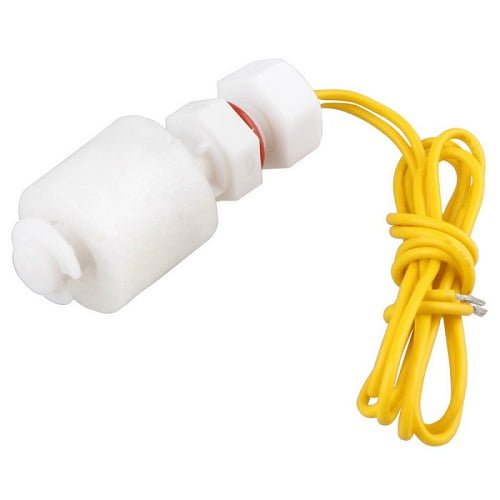
UMA Industries manufactures and supplies a level sensor for liquid-level monitoring in tanks, small process vessels and water-handling systems from its manufacturing unit in Village Sunped, Ballabgarh, Faridabad, Haryana, India. This product is a practical float-based solution for applications where a controller needs a signal when liquid rises or falls to a set point. It is widely useful in water tanks, utility systems, equipment protection and simple automation circuits where dependable switching matters.
Applications of level sensor
The level sensor uses float-ball movement to follow the liquid level. When the liquid drops, the float moves with it and passes a signal to the control device at the lower level. That simple action makes it suitable for on/off control, alarm indication and basic level-based automation. The body is supplied in ABS/plastic, and the source product description notes a mercury-free float switch design. For buyers comparing options, this is a straightforward electromechanical sensing device rather than a complex transmitter, so its value is in reliable switching and easy integration.
For control-panel integration, the sensor can be paired with related products such as a Digital Counter where signal tracking is required, or a Dosing Pump Timer where liquid demand has to be managed in a timed sequence. In projects that need humidity or environment monitoring alongside tank control, the Humidity Sensor page may also be useful for system planning.
Applications in homes, utilities and industry
In practical use, a level sensor supports overhead water tanks, water purifiers, aquariums, hydroponics, gardening setups, filtration systems, pet bowls and similar liquid-control applications. The source content also mentions transport tanks, storage tanks, water treatment tanks and industrial fluids such as petrol and diesel as examples where liquid-level sensing is relevant. For commercial buyers, the device can be considered wherever liquid presence, low-level warning or basic pump-control logic is required.
For Faridabad and nearby manufacturing users, this matters in maintenance rooms, utility blocks, small process lines and service areas that require simple level detection rather than a full instrumentation package. The product can also help reduce dry-running risk in connected equipment when used with the correct controller and wiring practice.
Key specifications to review before selection
Buyers evaluating this level sensor should review the stated electrical and mechanical details before ordering. The supplied product information includes a 30.5 cm cable length, maximum load of 50 Watt, maximum switching voltage of 250V DC, minimum voltage of 5V DC, maximum switching current of 0.5 A, maximum load current of 1.0 A, maximum contact resistance of 0.4 Ω and a temperature rating of -20 to 80 °C. These figures help determine controller compatibility, wiring approach and whether the sensor is suitable for the intended liquid-control duty.
Because website prices are company-confirmed, the buyer can review the listed price while finalizing suitability with the quotation team. Product size, capacity, internal and external dimensions, power supply, optional controls or accessories, delivery schedule and mode of transport may be finalized or changed according to customer requirements in the quotation or proforma invoice.
Selection guidance for the right installation
Select the level sensor based on the liquid type, tank geometry, switch action required, mounting position and the electrical rating of the connected circuit. For overhead tanks and compact utility vessels, a float switch often suits straightforward fill or drain logic. For industrial use, confirm the controller input, contact load and whether the application needs simple alarm indication or direct switching. If the circuit already includes timing or automation logic, a Counter with Timer can be relevant in the control sequence, while a Digital Humidity Meter may support related environmental checks in plant rooms or storage areas.
When comparing installation choices, ensure the cable route, immersion point and float travel do not interfere with tank walls, baffles or fittings. The sensor should be matched to the electrical load within the stated current and voltage limits so the contact is not over-stressed.
Operating procedure and routine use
The normal use of this level sensor is simple. Mount it in the tank or vessel at the required set point, connect it to the control device according to the circuit plan and confirm that the float moves freely with the liquid. Once installed, the sensor passes a signal when the liquid reaches the defined level position. That signal can then be used for pump control, low-level warning or basic automation.
Good operation depends on clean mounting, correct orientation and periodic functional checks. If the application is sensitive, verify the switching action during commissioning and after any tank cleaning, pipework change or controller replacement. For systems that combine level monitoring with panel logic, the sensor can work alongside other instrumentation used in the same control cabinet.
Level sensor wiring and control logic
During wiring, keep the circuit within the stated switching voltage and current limits. The level sensor is intended for signaling and basic switching, so the connected device should be selected with the same care as any other control input. Avoid forcing the float or using the device in a way that prevents its movement. In a simple pump-control arrangement, the sensor can help start or stop equipment when liquid crosses the chosen level, but the final logic depends on the customer’s panel design and safety requirements.
Calibration and routine verification
This this product does not require complex calibration like a laboratory transmitter, but routine verification is still good practice. Check that the float position corresponds to the intended level point, that the signal changes as expected and that the wiring terminals or connectors remain secure. If the sensor is used in a dirty or scaling liquid, inspect it more often because build-up can affect movement.
For the customer, routine verification should include a quick functional test after installation, after maintenance shutdowns and whenever the control response appears abnormal. If the connected system includes alarms or pump interlocks, confirm those functions together rather than checking the sensor alone.
Maintenance, cleaning and safety precautions
Maintenance for a this product is generally straightforward: inspect the float path, cable condition and mounting point, remove deposits if present and confirm that the sensor is not rubbing against tank surfaces. Keep the device within the stated temperature range of -20 to 80 °C and avoid overloading the contact beyond the approved electrical limits. If the application uses aggressive liquids or unusual installation conditions, review material compatibility before use.
Safety-wise, always isolate the circuit before inspection, use proper control-panel practices and make sure the sensor is not used beyond the specified switching ratings. In water tanks and small process systems, good cable routing and secure mounting are essential to avoid accidental snagging. For procurement teams, the main point is that this is a sensing component, so the overall safety of the final system depends on correct panel design and installation quality.
Faridabad manufacturing origin and pan-India supply
This this product is manufactured at UMA Industries’ unit in Village Sunped, Ballabgarh, Faridabad, Haryana, India. UMA Industries supplies and provides technical support to customers across India. That makes the product suitable for buyers who want direct factory-origin sourcing with support for selection, integration and post-order clarification.
For local and regional buyers in Faridabad, the location is useful for faster coordination on product matching and quotation. For outstation buyers, pan-India support helps teams specify the correct sensor for tanks, utility systems and basic automation circuits without needing a complicated procurement path.
Quotation, dispatch and commercial support
Published prices on the website are company-confirmed. Product size, capacity, internal and external dimensions, power supply, optional controls/accessories, delivery schedule and mode of transport may be finalized or changed according to customer requirements in the quotation or proforma invoice. Ready-stock compact products, controllers, spares and accessories may be dispatched by air courier within 3 working days, subject to availability, payment confirmation, destination serviceability and carrier schedules. Delivery timelines for complete salt spray chambers and other large equipment are confirmed separately according to model, capacity, packing and freight mode.
If you are selecting this this product for a new build or replacement project, send the tank type, liquid nature, mounting preference and control voltage for a quotation review. UMA Industries can then confirm the most suitable version for the application and the available dispatch option.
FAQs
What does this level sensor do?
The this product detects a liquid level change and sends a signal to the connected control device when the float moves to the set position. It is commonly used for tank-level control and low-level indication.
Is this suitable for overhead water tanks?
Yes. The source application list includes overhead water tanks, which makes this a practical option for basic water-level switching in domestic and utility systems.
Can it be used in industrial liquid systems?
Yes, the source copy mentions transport tanks, storage tanks, water treatment tanks and liquid sensing for fuels such as petrol and diesel as relevant industrial examples, subject to compatibility with the application.
What electrical ratings should I check?
Check the stated switching voltage, switching current, load current and contact resistance. For this this product, the supplied details are 250V DC maximum switching voltage, 0.5 A maximum switching current and 1.0 A maximum load current.
Does it need complex calibration?
No complex calibration is indicated in the supplied information. However, routine functional verification is advisable to confirm float movement and correct switching at the intended level point.
What material is used?
The supplied product description states ABS/plastic material. Buyers should still confirm any special compatibility requirement if the liquid is unusual or the installation environment is demanding.
Where is it manufactured?
The this product is manufactured at UMA Industries’ unit in Village Sunped, Ballabgarh, Faridabad, Haryana, India.
How do I get the correct version for my project?
Share the application, tank type, liquid nature, electrical load and wiring preference. UMA Industries can then confirm suitability during quotation and technical support.
Final note for buyers
If you need a dependable level sensor for tank control, liquid indication or simple automation, this product offers a practical float-based approach with clearly stated electrical limits and Faridabad manufacturing origin. For selection help, quotation support and pan-India supply assistance, contact UMA Industries with your application details today.
Need help choosing? Call/WhatsApp us for industrial pH/ORP solutions.


Reviews
There are no reviews yet.