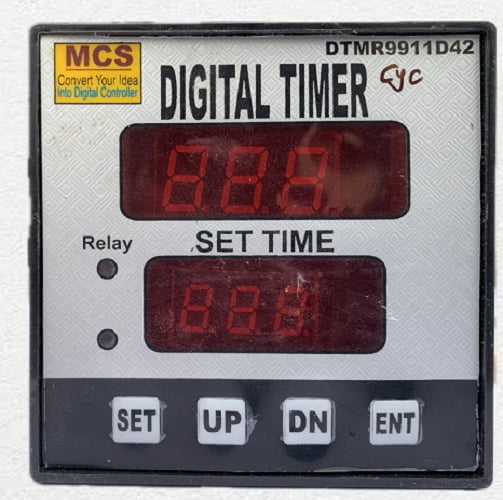
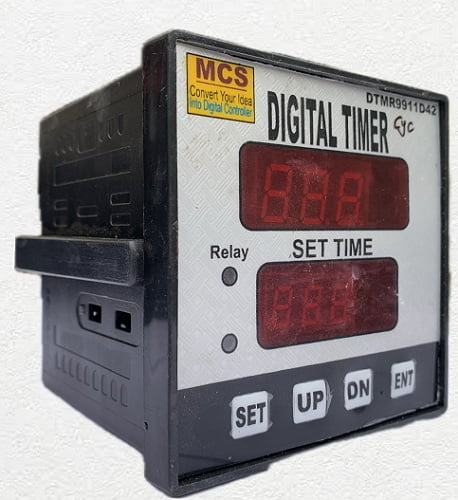
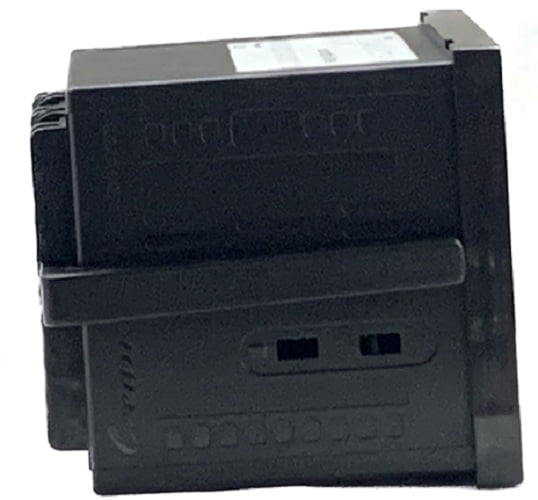
UMA Industries manufactures and supplies a cyclic timer for repeated ON and OFF time control in industrial panels, sequence circuits and repeat-duty automation tasks. This product is manufactured at UMA Industries’ unit in Village Sunped, Ballabgarh, Faridabad, Haryana, India, and UMA Industries supplies and provides technical support to customers across India. If you need a practical cyclic timer for machine cycling, process repetition or panel logic, this page is meant to help you choose the right configuration before quotation.
The published website price is company-confirmed, and the quotation stage remains flexible for size, power supply, panel layout, timing arrangement and accessories as needed for the application. That makes the cyclic timer suitable for both standard replacement work and project-based control panels where the final timing arrangement is decided after review of the actual duty cycle.
Applications for cyclic timer in industrial controls
The cyclic timer is commonly selected wherever a repeated ON/OFF sequence is needed instead of a one-time delay. In industrial use, this can support periodic machine action, intermittent load control, batch sequencing, test benches and simple automation tasks. It is especially useful when a panel builder wants a compact timer that can continue the cycle without manual restart after every interval. Buyers often compare the requirement with a Counter with Timer when a count-and-time function is also needed, or with a Dosing Pump Timer when a metered pump cycle must be repeated at set intervals.
For city and industrial-belt users in Faridabad, Ballabgarh, and nearby manufacturing clusters, the product can fit into panel work for workshop machinery, process equipment, inspection fixtures and utility control. The same selection approach also helps when a customer is looking for a repeat-control device alongside a Digital Counter or a Human Sensing Timer in a multi-function control panel.
Where the cyclic timer is a practical choice
A cyclic timer is best used when the machine or process must alternate between two states over and over. Typical examples include alternating ventilation, intermittent spray or feed action, repetitive test sequences, and panel-controlled duty cycling. In these cases, the timer contributes to consistency because the ON and OFF periods are preset rather than manually watched. If the job also requires signal counting, the customer may look at Digital Length Meter only as a related control-reference product; however, the exact selection should follow the machine logic and electrical panel design.
For selection, the key point is to match the cycle pattern to the actual machine duty. A cyclic timer is not chosen only by enclosure style or display size; it is chosen by whether the required sequence is repeat ON/OFF, whether the panel needs relay output behavior, and whether the wiring arrangement suits the control cabinet.
Selection guidance before purchase
When choosing a cyclic timer, the most important step is to define the working cycle clearly: how long the output should remain ON, how long it should remain OFF, and whether the sequence must repeat continuously. You should also confirm the supply requirement, the relay load interface in the panel, the preferred mounting style and whether the application is for a new machine or a replacement timer in an existing enclosure. Because quotation-stage requirements can change, published details should be treated as a starting point for the final configuration discussion.
For many buyers, the decision is also about ease of setting and operator familiarity. If the control panel is maintained by production staff, a simple repeat-cycle device can be preferable to a more complex controller. When needed, UMA Industries can help compare the this product with other timing or sensing products such as the Reject and Good Pcs detector or the Tip and Bit Detector Controller where the machine logic is different and signal handling is more specific.
Operating principle and user workflow
The basic idea of the this product is simple: set the ON interval, set the OFF interval, and allow the output to alternate according to those values. In panel use, the operator or electrician typically verifies the required cycle, powers the unit according to the system design, and then sets the timing values as per the installation needs. Once configured, the controller helps the machine repeat the same cycle without manual resetting after every interval.
For practical use, it is wise to document the timing setting on the panel drawing or maintenance sheet so that replacements can be done without confusion. A this product installed in a busy production area should be clearly labelled for voltage, output function and sequence purpose. This reduces avoidable setup errors during maintenance or shift handover.
Installation and initial setup notes
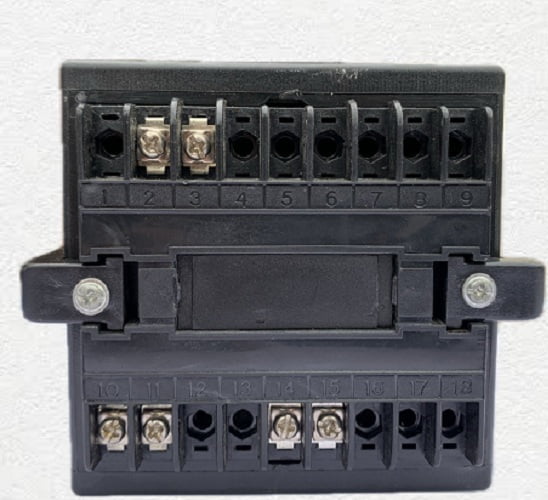
Before energizing the circuit, check the wiring against the control schematic and ensure the output is connected to the intended load path. Keep the enclosure clean and allow proper ventilation inside the panel. The this product should be installed by a qualified electrician or panel technician familiar with industrial control wiring, relay interfaces and safe isolation practices. If the application also uses temperature, humidity or process feedback instruments, separate those circuits logically so that the timer function stays independent and easy to service.
Where a compact timing device is being added to an existing panel, buyers often review related products such as the Digital Humidity Meter or the Humidity Sensor only as supporting references for broader panel instrumentation. The final installation, however, must always follow the actual machine drawing and control logic for the project.
Maintenance and routine verification
A this product generally needs only routine visual and functional verification, but that verification matters. During maintenance, confirm that the sequence still alternates correctly, the timing values remain as intended, the terminals are tight, the panel is free from dust and moisture, and the output behavior matches the production requirement. If the machine’s duty cycle changes, the timer setting should be rechecked immediately rather than left on an outdated value.
It is also useful to keep spare panel documentation and a simple test note showing the expected ON/OFF pattern. If the product is being used in a line with multiple control accessories, spare identification saves time during troubleshooting. For electrical panel teams, a this product should be treated as part of the broader routine inspection, not as a fit-and-forget item forever.
Safety precautions for industrial use
Industrial timing products must be installed with safe isolation, proper fusing, and suitable enclosure protection as per the panel design. A this product should never be wired casually across an unknown load, and the relay output should always be matched to the real control duty. Before maintenance or replacement, isolate the circuit and confirm that the machine cannot restart unexpectedly. When the timer controls a machine with moving parts, the panel designer should consider interlocks, guards, and operating procedures so that repetitive cycling does not create an unsafe condition.
If the timer is used in a system that also includes sensing or counting, the logic should be tested after installation. This is one reason buyers in Faridabad industrial areas often prefer to work with a manufacturer who can discuss panel logic clearly before dispatching the unit.
Faridabad manufacturing origin and India-wide support
This this product is manufactured at UMA Industries’ unit in Village Sunped, Ballabgarh, Faridabad, Haryana, India. That Faridabad origin is useful for industrial buyers who want direct manufacturing support, faster technical clarification and practical help during replacement planning. UMA Industries supplies and provides technical support to customers across India, which helps panel builders, OEMs and maintenance teams procure timing products without losing time in long routing chains.
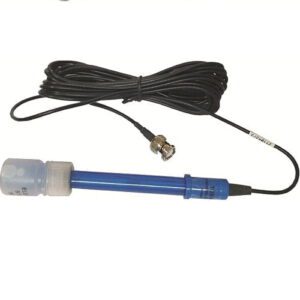
For projects in Haryana and other states, this means the buyer can discuss the actual cycle logic, replacement fit and panel requirement before finalizing the order. The same support also helps when the timer is one part of a larger control solution with other MCS products. For example, a buyer may compare it with a PH Sensor Lab Glass 1 Meter Cable only to understand adjacent instrumentation offerings, while the this product itself remains a dedicated repeat timing controller.
Dispatch, packing and quotation process
Ready-stock compact products, controllers, spares and accessories may be dispatched by air courier within 3 working days, subject to availability, payment confirmation, destination serviceability and carrier schedules. Delivery timelines for complete salt spray chambers and other large equipment are confirmed separately according to model, capacity, packing and freight mode. For this product, the this product is typically discussed as a compact controller, so dispatch planning can be handled differently from larger equipment, but the exact schedule still depends on order confirmation and stock position.
Published prices on the website are company-confirmed. Product size, capacity, internal and external dimensions, power supply, optional controls/accessories, delivery schedule and mode of transport may be finalized or changed according to customer requirements in the quotation or proforma invoice. For the cleanest commercial process, please share the intended application, existing panel photo if available, and the timing sequence you want the this product to repeat.
FAQs
What does a this product do?
A this product repeatedly alternates between ON and OFF states according to the time values set by the user. It is used when a machine or process needs a repeating cycle instead of a single delay.
Where is a this product commonly used?
It is commonly used in industrial panels, repetitive machine control, process sequencing, intermittent duty applications and simple automation tasks where repeat action is needed.
How do I select the right cyclic timer setting?
Start by defining the ON time, OFF time and whether the sequence should repeat continuously. Then confirm the supply and relay interface required by the panel.
Is the this product suitable for replacement in an existing panel?
Yes, provided the wiring, supply and load interface match the existing panel design. A replacement should always be checked against the actual schematic before installation.
Do I need a special maintenance schedule?
No special schedule is usually required beyond routine panel inspection, terminal tightening, function verification and keeping the enclosure clean and dry.
Can UMA Industries help with selection?
Yes. UMA Industries manufactures and supplies the this product from Faridabad and provides technical support across India for product selection and quotation-stage discussion.
How should I place an order?
Share your application, the required cycle pattern, and any panel details you have. UMA Industries can then confirm the suitable this product configuration and quotation.
For a practical industrial timing solution, choose the cyclic timer after reviewing your duty cycle, control panel design and replacement needs. UMA Industries is ready to support buyers from Faridabad and across India with manufacturing guidance, quotation-stage flexibility and technical assistance for the right repeat-control selection.
Need help choosing? Call/WhatsApp us for industrial pH/ORP solutions.


Reviews
There are no reviews yet.