UMA Industries manufactures and supplies the Humidity Sensor for industrial instruments, environmental monitoring, HVAC equipment, agricultural systems and OEM control panels. Manufacturing is from UMA Industries’ unit in Village Sunped, Ballabgarh, Faridabad, Haryana, India. The module is a practical choice when buyers need a compact analog sensing solution for relative humidity plus a separate temperature signal for integration with meters, controllers, PLC analog inputs, Arduino, ESP32 and similar systems. UMA Industries supplies and provides technical support to customers across India, and published website prices are company-confirmed. Product size, capacity, internal and external dimensions, power supply, optional controls/accessories, delivery schedule and mode of transport may be finalized or changed according to customer requirements in the quotation or proforma invoice.
The Humidity Sensor is suited to humidity indication, local logging and automatic control where stable air circulation and correct installation are important. In practical use, it can support humidifiers, dehumidifiers, ventilation systems, incubator environments, storage rooms, mushroom cultivation, greenhouse monitoring, electronics cabinets and process rooms. Because humidity changes with airflow, temperature gradients and enclosure design, selection should always consider the actual mounting point, the control system input type and the operating environment rather than only the sensor body itself. For buyers comparing similar monitoring products, this sensor is best understood as a straightforward analog module rather than a digital communications device.
Humidity Sensor for Faridabad manufacturing and Pan-India supply
Buyers from Faridabad industrial users often need fast integration into panels, retrofit jobs and low-cost machine builds, while nearby buyers in Ballabgarh and wider NCR production zones may want a simple sensing module that is easy to wire and replace. This Humidity Sensor suits that requirement because it offers analog output rather than a communication protocol, making it straightforward for maintenance teams and OEM builders who already use analog display or controller circuits. The Faridabad manufacturing origin also helps procurement teams who prefer an Indian source for repeat orders, service coordination and project standardization. UMA Industries’ support model is suitable for customers who need product selection help, quotation clarification and practical guidance during panel assembly or machine commissioning.
Where this sensor fits best
Common applications include humidity meters and room monitoring panels, humidifier and dehumidifier feedback loops, HVAC and ventilation control cabinets, agricultural monitoring in greenhouses and nurseries, storage areas where moisture control matters, electronic enclosures where condensation risk must be reduced, and OEM instruments needing a simple analog humidity input. The same product can also be useful in maintenance work where a technician wants to verify whether moisture-related issues are being caused by the environment, by airflow design or by an enclosure problem.
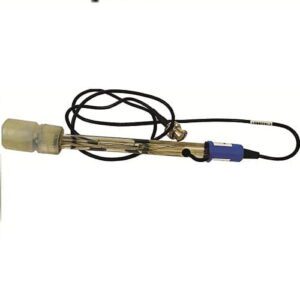
For customers selecting complete monitoring solutions, useful related pages include Digital Humidity Meter, PH Sensor Lab Glass 1 Meter Cable, tds meter modbus rtu rs485 and Digital TDS Meter. These related products are helpful when a project needs display, sensing or controller integration in a broader panel layout.
Technical overview of the Humidity Sensor
This Humidity Sensor combines humidity sensing electronics with a 10K NTC thermistor for temperature measurement. The humidity output is analog and is intended for connection to an ADC input, analog display or controller circuit. The temperature output is handled separately through the NTC element, so the final temperature reading depends on the connected divider circuit, reference resistor and controller logic. In practice, the module is best used where the designer wants a compact sensor with simple wiring and does not need a digital bus. The module works best when the surrounding installation lets air reach the sensing area naturally and without obstruction.
The standard humidity output varies approximately from 0 to 3V. Under standard conditions, the relationship is approximately 30 millivolts for every 1% RH. For example, an output of approximately 1.5V corresponds to approximately 50% relative humidity. These figures are useful for panel builders and software developers who need a starting point for conversion in the connected controller. As with any analog sensor, the final displayed value should be checked against the actual environment and the ADC input characteristics of the chosen system.
Selection points before ordering
When selecting a Humidity Sensor, confirm the supply voltage, the controller input type, cable routing, enclosure ventilation and the expected humidity band in the application. If the sensor will be used in a humidifier room, HVAC duct, cultivation chamber or storage cabinet, allow enough airflow around the sensing area and avoid direct wetting, condensation or heat from nearby electronics. Published prices on the website are company-confirmed. Product size, capacity, internal and external dimensions, power supply, optional controls/accessories, delivery schedule and mode of transport may be finalized or changed according to customer requirements in the quotation or proforma invoice. That flexibility is especially useful for OEM integration and replacement jobs where wiring or enclosure constraints differ from one installation to another.
In quotation preparation, it is helpful to note the required mounting style, the number of sensors required, cable length expectations, the type of control panel being used and whether the project is a replacement or a new build. This reduces back-and-forth during procurement and helps the UMA Industries team suggest a suitable configuration based on the actual use case. If the application is long cable, noisy electrical environment or compact enclosure work, those details should be shared early so the final selection remains practical.
Operating principle and output use
The Humidity Sensor measures relative humidity through its internal sensing element and conditions the signal into a usable analog voltage. The output rises with humidity, so the connected controller can convert voltage into an RH value using the appropriate calibration curve or software mapping. The separate 10K NTC temperature output should be wired into a suitable voltage-divider circuit and read through a compatible analog input. Because the final reading depends on supply stability, ADC quality and installation conditions, it is good practice to verify the reading after installation and after any major wiring change.
Humidity Sensor wiring and integration notes
For reliable results, use a regulated 5V DC supply, common ground and proper cable segregation from motors, contactors and VFD lines. Keep the sensing side away from direct sunlight, radiant heat and water droplets. The this product is designed for general industrial and environmental monitoring; it is not a substitute for a validated reference instrument in critical process work. If the controller logic includes alarms, fan outputs or humidifier control, set the switching logic after confirming stable measurements at the actual installation point.
When connecting to Arduino, ESP32, PLC analog-input modules or panel meters, allow enough time for the sensor to stabilize after power-up. Short-term fluctuation is normal if airflow is changing or if the sensor has just been moved from one environment to another. For better displayed consistency, use software averaging or a stable display update rate rather than reacting to every brief change.
Applications in industry, agriculture and OEM control
Because humidity directly affects comfort, product storage, condensation and process quality, the this product is useful in a wide range of low- and medium-complexity systems. HVAC contractors may use it for room balancing and return-air monitoring. Agricultural users may use it in protected cultivation, mushroom rooms and nursery environments. OEM panel builders may use it in compact controllers, handheld instruments and display units. Maintenance teams may use it to diagnose moisture-related issues in cabinets, ducts or enclosed equipment. In each case, the key benefit is simple analog integration with standard control hardware. The module is also useful where the design team wants a practical sensor that can be explained easily to operators and service technicians.
Typical room-side uses include storage areas, material handling spaces, electronic cabinets, utility areas, cultivation rooms and environmental chambers. In each of these installations, the user should look for representative ambient air rather than a location influenced by nearby heat sources, steam outlets or direct ventilation blasts. That placement discipline improves the usefulness of the reading more than any software correction can.
Operation, calibration and routine verification
To start using the this product, mount it where it can sample representative ambient air. Power it from a clean regulated supply, connect the humidity output to the controller input and allow the reading to stabilize before making a final decision. If the displayed humidity must match a reference meter, compare both instruments in the same environment and apply an offset in the controller or display logic if needed. Routine verification is recommended after installation, after maintenance work and whenever the enclosure, airflow path or controller scaling changes.
If a more formal check is needed, place the sensor and a reference instrument in the same space, keep them at similar height and avoid localized heat sources. Record readings only after stabilization. For field use, the simplest calibration approach is usually a controlled comparison rather than complicated bench adjustments. That makes the this product practical for service teams who need repeatable monitoring without overcomplicating the control panel. During quotation or project review, it is also sensible to ask whether the customer wants only a sensing module or a complete monitoring arrangement with display and control functions.
Installation guidelines for better readings
Correct installation is important because humidity depends strongly on temperature and local airflow. The sensor must measure air representative of the actual environment rather than air heated by electronic components. Install the sensor where ambient air can circulate through its openings. Do not block the ventilation holes with adhesive, tape, paint or mounting parts. Keep the sensor away from transformers, power supplies, displays and processors. Avoid mounting the sensor directly above components that generate heat. Protect the sensor from direct sunlight and strong radiant heat. Do not install it directly in front of a heater, cooler or steam outlet. Avoid positions where water droplets or condensation can enter the enclosure. Provide sufficient airflow without exposing the sensor to excessive wind pressure. Keep the signal cable away from motors, contactors, VFDs and mains wiring. Use a stable, filtered and regulated 5V DC supply. Connect sensor and controller grounds correctly. Verify the sensor reading after final installation.
These steps are especially useful in industrial cabinets, agricultural rooms and HVAC projects where the physical mounting point is often more important than the sensor body itself. If the location is changed after commissioning, the displayed humidity may shift even though the sensor is still functioning correctly.
Maintenance and safety precautions
Keep the sensor clean, dry and properly ventilated. Do not apply mains voltage to the sensor, reverse the supply leads, immerse the unit in liquid or expose it to continuous condensation. Avoid corrosive vapours such as strong acids, ammonia, chlorine or solvent fumes that can degrade the sensing element and electronics. Inspect the cable for cuts, strain or poor terminations during periodic maintenance. If the reading becomes unstable, check the supply, wiring, enclosure airflow and controller input before replacing the unit. A properly installed this product should be treated as a monitoring device that benefits from regular verification rather than as a fit-and-forget part.
Do not attempt aggressive cleaning methods on the sensing area. If the unit is installed in a dirty industrial location, inspect the mounting area regularly and keep the surrounding airflow path open. Preventing dust build-up and cable strain is usually more effective than trying to correct a bad installation after the reading has become inconsistent.
Faridabad origin, support and dispatch
This this product is manufactured at UMA Industries’ unit in Village Sunped, Ballabgarh, Faridabad, Haryana, India. UMA Industries supplies and provides technical support to customers across India. Ready-stock compact products, controllers, spares and accessories may be dispatched by air courier within 3 working days, subject to availability, payment confirmation, destination serviceability and carrier schedules. Delivery timelines for complete equipment and other large items are confirmed separately according to model, packing and freight mode.
For project selection, integration advice or quotation support, buyers can call 9310530941 or 8178668698. The this product is a straightforward option when you need an analog humidity module backed by a Faridabad manufacturer and pan-India support.
Frequently Asked Questions
What is the this product used for?
The this product is used to measure relative humidity in industrial, agricultural and environmental control systems. It is commonly selected for HVAC, humidifiers, dehumidifiers, cabinets, storage areas and OEM instruments.
Does the this product give a digital output?
No. This this product uses an analog output for humidity measurement and a separate NTC-based temperature output. It is meant for analog inputs, meters, controllers and compatible embedded systems.
What supply does the this product require?
The module is intended for a regulated 5V DC supply. Stable power is important for consistent output and accurate controller scaling.
Can the this product be connected to Arduino or ESP32?
Yes, provided the input is configured correctly. The humidity output can be read by an ADC input, while the temperature output requires the correct voltage-divider circuit and calculation method.
How should the this product be installed?
Install it where ambient air can circulate freely, away from direct heat, steam, water droplets and corrosive fumes. Good placement is essential for a stable reading from any this product.
Is calibration required after installation?
Factory calibration helps, but final verification is recommended after mounting. Compare the sensor with a reference instrument and apply a correction factor in the controller if the application requires tighter consistency.
Can the this product be used in condensing environments?
It is intended for non-condensing operation. Continuous condensation or direct liquid exposure can affect the sensing element and reduce reliability.
How do I choose the right this product for my project?
Match the supply voltage, output type, mounting space and controller input before ordering. If you need help, UMA Industries can guide selection of the this product for replacement, OEM or new installation work. Share the application type, mounting location and panel requirements so the quotation can reflect the actual need.
If you are planning a new panel, retrofit or OEM build, choose the this product for simple analog integration, Faridabad manufacturing origin, pan-India support and practical industrial use. Contact UMA Industries for quotation support and application guidance.
Selection Guidance for Humidity Sensor
Use the verified product configuration, installation conditions and required control functions when selecting Humidity Sensor.
Humidity Sensor is supplied with the final configuration recorded in the customer quotation or proforma invoice.
Need help choosing? Call/WhatsApp us for industrial pH/ORP solutions.


Reviews
There are no reviews yet.