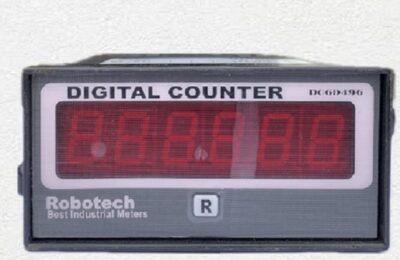
day night shift production monitoring | 6-Digit Wi-Fi Counter

Sale!

Original price was: ₹7,200.00.Current price is: ₹6,200.00.

- +
Guaranteed Safe Checkout

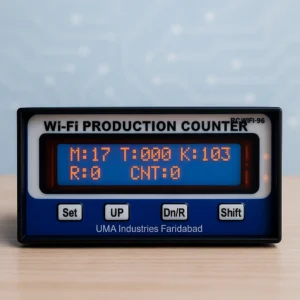
day night shift production monitoring is a compact industrial Wi‑Fi production counter for live shift totals, machine run-time and report-based monitoring. It is suited to plants that want digital counting, browser access and non-volatile data storage in one panel-mount unit.

  • 6-digit LED display with count range from 000000 to 999999
  • Counts pulses from proximity sensor or limit switch inputs
  • Shows total count, RPM, run time and Wi‑Fi status
  • Useful for day, night and machine-wise production review
  • Manufactured at UMA Industries’ unit in Village Sunped, Ballabgarh, Faridabad, Haryana, India
  • UMA Industries supplies and provides technical support to customers across India

Published prices are company-confirmed. Configuration, reporting options and integration details can be finalized during quotation.

UMA Industries manufactures and supplies day night shift production monitoring for factories that need reliable pulse-based counting, shift separation and browser-accessible production visibility. This Wi‑Fi-enabled unit is a practical choice for plants that want day, night and total production records without manual log sheets. Manufactured at UMA Industries’ unit in Village Sunped, Ballabgarh, Faridabad, Haryana, India, it is intended for industrial use and is supported across India by UMA Industries.

Why factories use day night shift production monitoring

day night shift production monitoring helps supervisors see machine activity, shift totals and runtime in one place. The panel display supports quick shop-floor review, while the web view helps users check counts from a mobile phone or PC connected to the same router. For production teams, this makes it easier to compare shift output, reduce manual recording errors and track machine stops more consistently. The system is especially useful where the same machine runs across multiple shifts and needs separate daily and night performance records.

Typical buyer applications include power press lines, textile and garment equipment, wire drawing machines, packing machines and other continuous production machines that generate pulse signals. It is also useful wherever teams need event counting, reset counting or machine-wise production visibility.

Applications and factory use cases

The product is designed for practical industrial monitoring rather than a general-purpose office display. Plants often use day night shift production monitoring to track:

  • shift-wise output for planning and reporting
  • machine-wise count comparison across multiple operators
  • run-time and stoppage visibility for maintenance teams
  • daily totals for production reconciliation
  • browser-based reporting for managers and supervisors

If your shop floor already uses sensor pulses for counting, this unit can fit naturally into the existing process. It is also suitable where the goal is to move from manual registers to digital records with a compact panel instrument. For plants with several machines, the same concept can be used to compare output line by line, especially when supervisors want a clear record of which machine completed which shift load.

In daily production review, this type of counter is helpful for identifying whether a stoppage came from the machine, the process or the operator changeover. That makes it useful not only for counting finished pieces, but also for basic production discipline, shift handover and corrective action review. Teams that prepare shift summaries can use the recorded totals as a consistent reference point.

Selection guide for this counter

Choosing the right version depends on the machine signal, panel space and reporting needs. The product family includes related options such as Smart Counter Wi-Fi, Wi-Fi production counter with operator wise reports, shift wise production counter and machine wise production counter. During quotation, published prices are company-confirmed and product size, capacity, power supply, optional controls, reporting details and transport mode may be finalized according to customer requirements.

For most industrial users, the key selection questions are: what pulse source is available, how many machine events must be counted, whether day/night separation is needed, and whether the team wants local display only or web-based reporting as well. The exact installation and integration plan can be matched to the machine and site layout during enquiry. Buyers should also consider whether the counter will be mounted close to the machine or on a shared panel board, because this affects cable length, viewing angle and routine access for operators.

When preparing a quotation, it is helpful to share the machine type, the kind of sensor already in use, expected counting speed, and whether the unit will be used for one machine or several machines in sequence. This helps the final configuration stay aligned with real plant conditions.

Key technical points of day night shift production monitoring

This model is a 6-digit production counter with a count range of 000000 to 999999 and a resolution of 1 count per signal. The input is intended for proximity sensor or limit switch pulses. Output is through a potential-free relay contact, with a 5A option if required in the preset model. The display is a bright 6-digit seven-segment LED type. Operating voltage is 220 Vac. The body is PP/ABS and the stated size is 96 × 48 × 110.

The unit is suitable for counting machine pulses and for showing live total count, RPM and machine run time on the display and browser interface. It can also support reporting formats that separate day, night and total activity. For production monitoring, these basic points matter because they determine how easily the instrument can be read, how confidently it can be wired, and how well it can fit an existing panel cutout. The compact size is useful where the control panel has limited space and a clear digital readout is required.

Because the unit is used in industrial environments, a simple and stable installation is usually preferred over complex setup. A clear signal source, a proper panel mounting position and a clean wiring route generally give the best result in day-to-day use. This is especially important when the machine runs for long hours or across multiple shifts.

How the system works

day night shift production monitoring receives pulse signals from the machine or sensor. Each pulse adds to the count, and the display updates in real time. In preset or relay-based versions, the relay output can operate when the configured count is reached. The Smart Counter Wi‑Fi concept used in this product family allows data visibility through a browser on a local network, making it suitable for plants that want simple digital oversight without changing the basic production process.

For better daily tracking, teams often pair the counter with a naming convention for machine number, operator or line number. This keeps reports clear for each shift and helps supervisors compare output more accurately. In practice, this means a production head can review one machine in the morning shift, a second machine in the evening shift and then check the total without depending on handwritten logs.

Where the factory wants a quick operational check, the live display can be used at the machine itself, while the browser view can be used by a manager or accountant in another section of the plant. This division of use makes it easier to keep both shop-floor and office review aligned.

Operation, setup and routine verification

Installation should begin with confirming the sensor type, pulse source and panel cutout. After wiring, the user should verify that the display increments correctly with each machine pulse and that the day/night reporting logic matches the factory’s shift timing. For browser access, the device is connected to the local Wi‑Fi network and the IP address is opened in a browser.

day night shift production monitoring is best checked routinely against the actual machine cycle during the first few runs after installation. This helps confirm signal stability, count direction and correct visibility of runtime and totals. If the production process changes, the count logic and reporting format should be reviewed again during the next maintenance window. A short trial run after wiring is usually enough to confirm whether the sensor is receiving the right signal and whether the display is counting only the intended machine events.

For smoother commissioning, many users first test the counter with a small number of known pulses, then compare the display against the physical cycle of the machine. This simple check reduces the risk of setup errors and helps the maintenance team build confidence before full production starts.

Calibration and verification tips

In factory use, calibration mainly means checking whether the counter matches the actual machine pulse pattern and whether any factor settings are aligned with the application. If the machine speed changes or the sensor position is adjusted, the count should be rechecked. This is a practical step, not a complicated laboratory process. The aim is to make sure the displayed production figure reflects the real machine output as closely as possible.

For quotation and installation planning, it is also sensible to note whether the machine runs continuously, starts and stops often, or operates in long batch cycles. Those details help determine how the counter should be reviewed during commissioning and what type of reporting is most useful to the team.

Maintenance and care

Routine care for day night shift production monitoring is straightforward. Keep the panel clean, ensure terminals remain tight, and avoid moisture or dust ingress at the mounting location. Where the machine environment is vibrating, a periodic inspection of wiring and mounting hardware is good practice. Since the unit stores important information in non-volatile memory, it is designed to retain data during power interruptions. That said, factory teams should still follow their own record-keeping and backup practice for production data.

If the machine signal becomes noisy or unstable, check the sensor condition, cable routing and grounding practice before changing the counting settings. This usually resolves more issues than replacing the display unit itself. A regular visual inspection during planned maintenance is often enough to keep the counter dependable over long service periods.

Maintenance teams should also keep the display readable and the enclosure free from unnecessary stress. When a plant uses multiple counters on one line, it is useful to label machine numbers clearly so that any future service call or reconfiguration can be handled without confusion.

Safety and installation precautions

Use the product on the specified industrial supply and only with a correctly matched sensor or switch signal. Wiring should be completed by qualified personnel. Before commissioning, confirm that the relay logic, machine stop conditions and any external interface behave as intended. The goal is accurate production monitoring, so signal quality matters as much as display visibility.

When fitting day night shift production monitoring into an existing line, avoid routing sensor cables alongside high-noise power conductors where possible. This helps maintain stable pulses and consistent counting. If the machine environment is harsh, the mounting position should allow the operator to read the screen clearly without exposing the unit to avoidable handling or accidental impact.

It is also a good practice to review the counter settings before the start of a new shift, especially where day and night reporting are used for formal production records. A quick check at shift change helps avoid confusion about which interval is being recorded.

Faridabad manufacturing and pan-India support

UMA Industries manufactures this product in Faridabad and supports industrial customers across India. This is valuable for plants that need a dependable source for production monitoring instruments, related accessories and basic technical guidance. Buyers in NCR, northern India and other industrial regions can source the unit from the same manufacturing base while working with a company that understands practical shop-floor use.

The approved dispatch wording is important for planning: ready-stock compact products, controllers, spares and accessories may be dispatched by air courier within 3 working days, subject to availability, payment confirmation, destination serviceability and carrier schedules. Delivery timelines for complete salt spray chambers and other large equipment are confirmed separately according to model, capacity, packing and freight mode. For this compact counter family, dispatch depends on the same availability and serviceability conditions. Customers should therefore finalize the machine requirements early so the quotation and order process can proceed smoothly.

Published prices are company-confirmed. Product size, capacity, internal and external dimensions, power supply, optional controls/accessories, delivery schedule and mode of transport may be finalized or changed according to customer requirements in the quotation or proforma invoice.

Related products and page options

For buyers comparing variants, these internal pages may help: smart production counter for industry, Wi-Fi based online production counter with email report, LCD display production counter and power press production counter. If you need operator-wise reports, multiple-machine review or a different display style, the quotation stage is the right time to finalize the best fit.

These related pages are useful when a plant wants to compare local display options with browser-based reporting, or when the machine type itself suggests a different counter style. They also help buyers decide whether a single machine, a line of machines or an operator-based workflow is the better fit for the final installation plan.

day night shift production monitoring for better reporting

In many plants, this product becomes the simplest way to align production, maintenance and management records. The day shift team sees the live count, the night shift team can continue from the same digital record, and management can compare totals without waiting for handwritten logs. This is especially useful where output, stoppages and runtime must be reviewed by line supervisors at the end of each shift.

The same setup also supports basic accountability. When the counter is read at the end of each shift, the production team can compare the actual count with the target, note stoppages and identify whether the next cycle needs a process correction or a maintenance check. That keeps reporting practical and easy to maintain on a busy shop floor.

FAQs

1. Does this product need internet?

No. For local monitoring it works on the factory Wi‑Fi network. Internet is only needed for features such as email reports and cloud-based access, where enabled in the system configuration.

2. Can I connect my existing proximity sensor?

Yes. The product is intended for pulse inputs from a proximity sensor or limit switch, subject to correct signal compatibility and wiring.

3. What happens during a power failure?

The product family uses non-volatile memory so important data such as counts and settings are retained when supply is interrupted.

4. Can this be used for shift-wise reporting?

Yes. The product is designed for day, night and total production visibility, making it suitable for shift-based tracking and comparison.

5. Is this product suitable for multiple machines?

It can be used machine-wise, depending on the installation plan and how the pulses are organized. Many buyers use one unit per machine for clearer reporting.

6. What does the display show?

The family description mentions live total count, RPM, machine run time and Wi‑Fi status on the LCD and browser view.

7. Can the reports be customized?

Yes. Web page layout, report formats and communication/integration options may be customized, especially for OEM and bulk requirements.

8. How should I request the right quotation?

Share the machine type, pulse source, expected reporting format, panel cutout need and any integration requirement. UMA Industries will then confirm the suitable configuration during quotation.

9. Is this suitable for daily factory review?

Yes. The unit is useful for everyday production checking because it combines live counting, shift tracking and runtime visibility in one compact instrument.

10. What information should I keep ready before ordering?

Keep the machine name, sensor type, supply requirement, panel space and the desired shift-report format ready. This makes the enquiry and quotation process faster and more accurate.

For industrial production tracking, day night shift production monitoring offers a compact and practical path from manual counting to digital visibility. If you need the best configuration for your machine or line, contact UMA Industries for quotation and technical review.


Need help choosing? Call/WhatsApp us for industrial pH/ORP solutions.


Weight400 g
Dimensions12 × 11 × 6 cm

Reviews

There are no reviews yet.

Be the first to review “day night shift production monitoring | 6-Digit Wi-Fi Counter”
🟢 WhatsApp Price 📞 Call Now
Scroll to Top